Manual team process
Plan team recognition process
Agree with the team which work to recognise. Routine contributions count alongside visible projects. Check with the person involved whether to mark it publicly or privately.
Assign a process owner. That person collects suggested occasions, checks details with relevant colleagues and reviews the process when the team changes.
For a group card, set an opening day and time in the card maker, then copy the writers' link and share it. Each person writes their own note.
Get started for FREE! then £4.99 per card
Create a cardRead Priya's leaving card
Published · Updated

Organising the occasion
- 01
Choose the work to recognise
Agree which work the team wants to notice. Include routine contributions as well as visible projects without inventing a league table.
- 02
Ask the people involved
Check whether the people receiving thanks want it shared in a meeting or privately. Keep the format open to their preference.
- 03
Give the process an owner
Name somebody to collect suggested occasions and check details with the relevant colleagues. Review the process when the team changes.
- 04
Keep contributions voluntary
For a group card, choose a cover and opening time and share the writers' link. Leave the note to each person and do not chase somebody who declines.
- 05
Review what happened
Ask the people involved whether the timing and format worked. Change the next occasion using their feedback, without attaching a score to their notes.
Planning checklist
| Responsibility | Agree with | Check |
|---|---|---|
| Occasion | The team | Which work is being recognised |
| Privacy | The person receiving thanks | Whether to mark it publicly or privately |
| Organisation | The process owner | The people to contact and the opening time |
| Participation | Each contributor | Whether to write in the card |
| Review | The people involved | What timing or format to change next time |
Card maker: https://tbfcards.com/quick/
Writers' link: https://tbfcards.com/manage/
Planning the occasion
Name a process owner. That person collects suggested occasions, checks details with the relevant colleagues and reviews the arrangement whenever the team composition changes.
Ask first. Check whether the person receiving thanks wants the occasion marked at a team meeting or kept entirely private, then keep the format open to their answer.
Routine work counts. Include contributions that are not attached to a named project, so the process notices effort that might otherwise go unremarked by the wider team.
Keep participation voluntary. Do not chase a colleague who declines to write in the card.
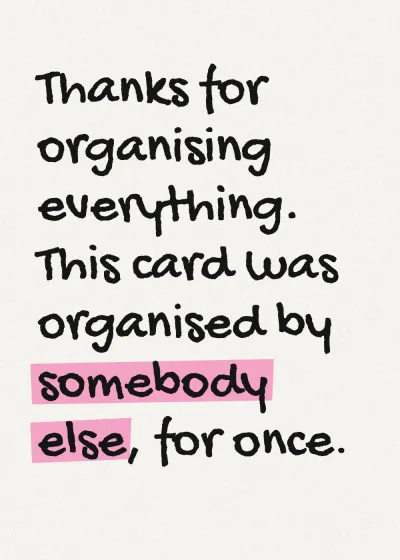
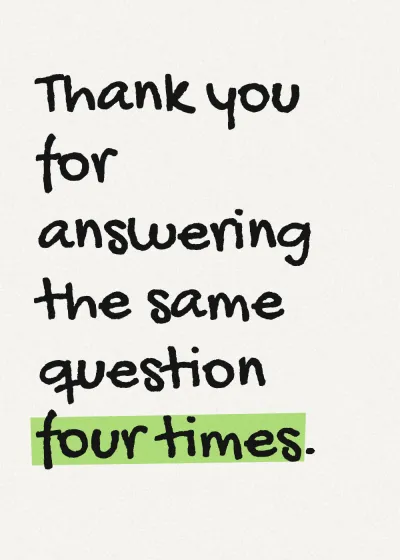
Pick a design








Questions
Who decides what work gets recognised?
The team agrees together. Routine contributions count as much as visible projects. Avoid creating a league table or ranking colleagues against each other.
How do we set up a group card?
Choose a card cover in the card maker and set the opening day and time. Share the writers' link yourself. Each person writes their own note at a time that suits them.
What if someone does not want to write in the card?
Participation stays voluntary. Do not chase a colleague who declines. The process works well when people write freely rather than under any obligation.
Somebody has a day coming up.
Get started for FREE! then £4.99 per card
Create a card